Shafter Silver Project
Project Overview
The Shafter Project is located in Presidio County, Texas, near the town of Marfa. The Project is situated within a basin carbonate sequence that extends 1,600km from northern Mexico through southwest Texas, and lies in an extension of Mexico’s Eastern Sierra Madre Belt which is home to Penasquito, the world's fifth largest silver-producing mine, operated by Newmont (Figure 1).
Black Bear Minerals is currently advancing exploration and restart studies at Shafter, aimed at leveraging the Project's substantial existing infrastructure to support a potential low-capital operational restart strategy.
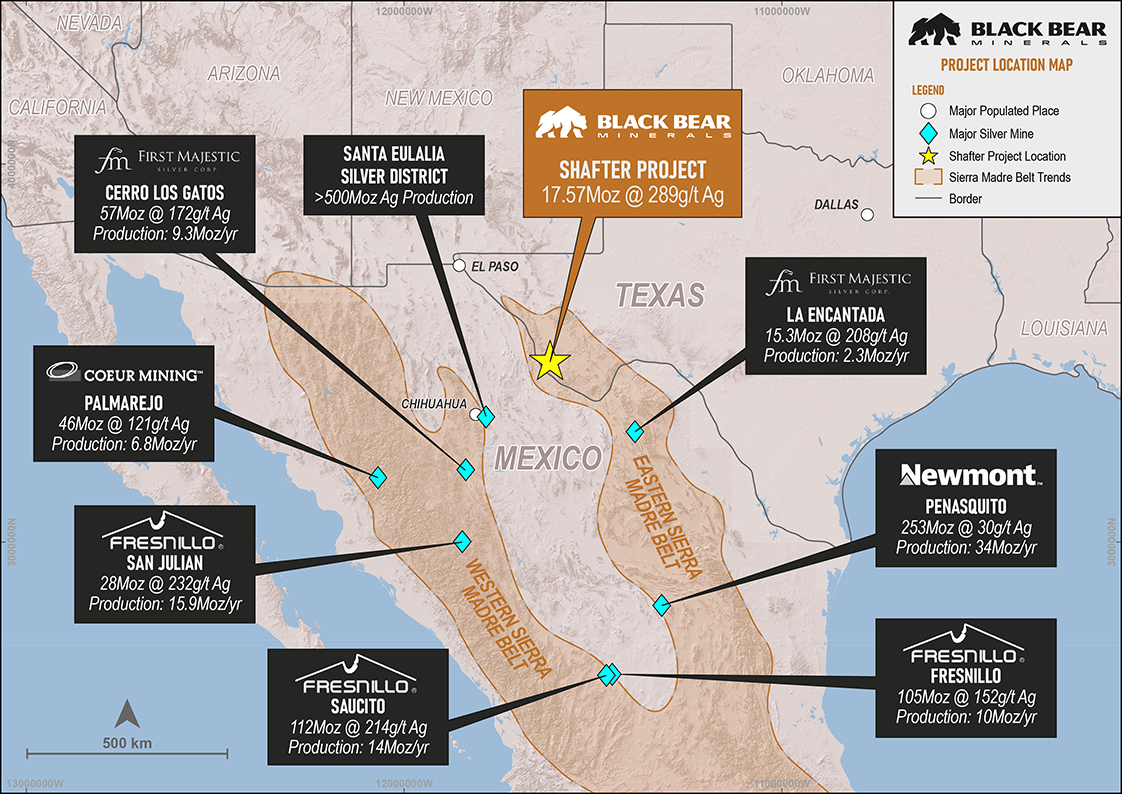
Figure 1: Location of Shafter Project in relation to major silver mines of the Sierra Madre Belt.
Marfa, 64km north of the Project, with a population of approximately 1,800, serves as a local administrative hub and is known for its focus on arts and culture, ranching, and tourism. Presidio, 32km south with a population around 4,100, plays an important role as an administrative centre for US Border Patrol operations, as well as supporting agriculture, ranching, tourism, and transportation.
The mineralised zone at Shafter spans approximately 4 kilometres of strike from west to east, and gently dipping eastward (Figure 2). The western portion outcrops at surface and was historically worked as the Presidio Mine, which operated from 1883 until its closure in 1942 due to declining silver prices and war time legislation. During that period, the mine produced approximately 2.3 million tons of ore containing 35.2 million ounces of silver, averaging 521 g/t Ag. The historic Presidio Mine workings include 160km of underground drifts, declines, adits, and stopes, along with four production shafts.
Aurcana Silver Corporation (formerly listed on the TSX-V) acquired the Project in 2008 (through its subsidiaries Rio Grande Mining Company and Shafter Properties Inc.), conducting additional drilling and resource classification work prior to building new processing facilities. Aurcana commenced production in 2012 and operated until December 2013, when operations ceased due to a significant drop in the silver price to US$18.19 oz Ag. Aurcana produced 134,557oz Ag in 2012–2013 primarily from a starter open pit and limited cutbacks on Presidio Mine workings.

Figure 2: Topographic map of the Shafter Project displaying holes with received assays (black callouts) and historic drillhole intercepts (brown callouts) in relation to the Foreign Mineral Resource Estimate (yellow shading).
Infrastructure
In 2012, a mill, refinery, warehousing, and administrative facilities were constructed. The warehouse complex covers 24,000 square feet and includes key infrastructure, such as a maintenance shop, dry storage, assay laboratory, administration offices, mill process units, mill offices, and a Merrill-Crowe plant and refinery.
Site Buildings
- 2,230m² warehouse complex, which houses the maintenance and truck shop (557m²), the warehouse (1,115m²), and the assay laboratory (557m²)
- 981m² administrative building, which house the offices, first aid and training room, as well as a data room to compile operations records
- 1,370m² mill process unit
- 250m² Merrill-Crowe recovery plant and refinery
- A hoist building and two core sheds near the Gold Fields shaft in good usable condition
Power
A regional 69 kV utility-owned power line connects to the on-site substation (as shown in figure 5) and power is distributed to various points on the property via 11 kV overhead power lines where it will be stepped down to 4,160 VAC and lower voltages as required.
Water Rights
Full unincumbered water rights for exploration, development and any potential future operations.
Permitting
Following a detailed regulatory and administrative verification program completed in early 2026, Black Bear Minerals confirmed that all major permits referenced in the 2018 Preliminary Economic Assessment (PEA) for the Shafter Silver Project are valid, current, and transferable where required.
All key operating and environmental permits have been confirmed active and in good standing, with all major renewal obligations and administrative processes now satisfied. Minor administrative and restart-specific permits will be finalised as part of the operational restart strategy being advanced with Ausenco.
Confirmed permitting status represents a significant competitive advantage for the Project, materially reducing development timelines, regulatory risk, and upfront capital intensity as the Company progresses toward a near-term restart.
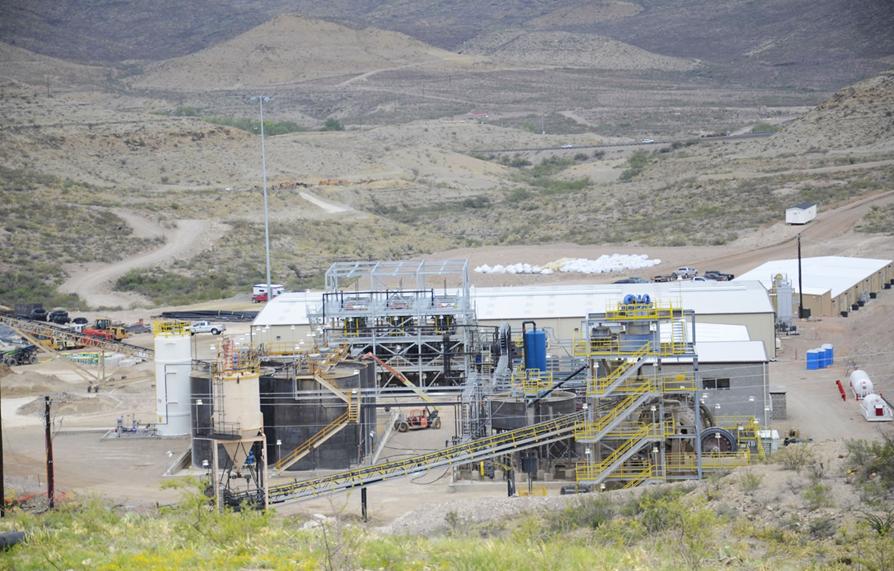
Figure 3: Shafter Processing Infrastructure.
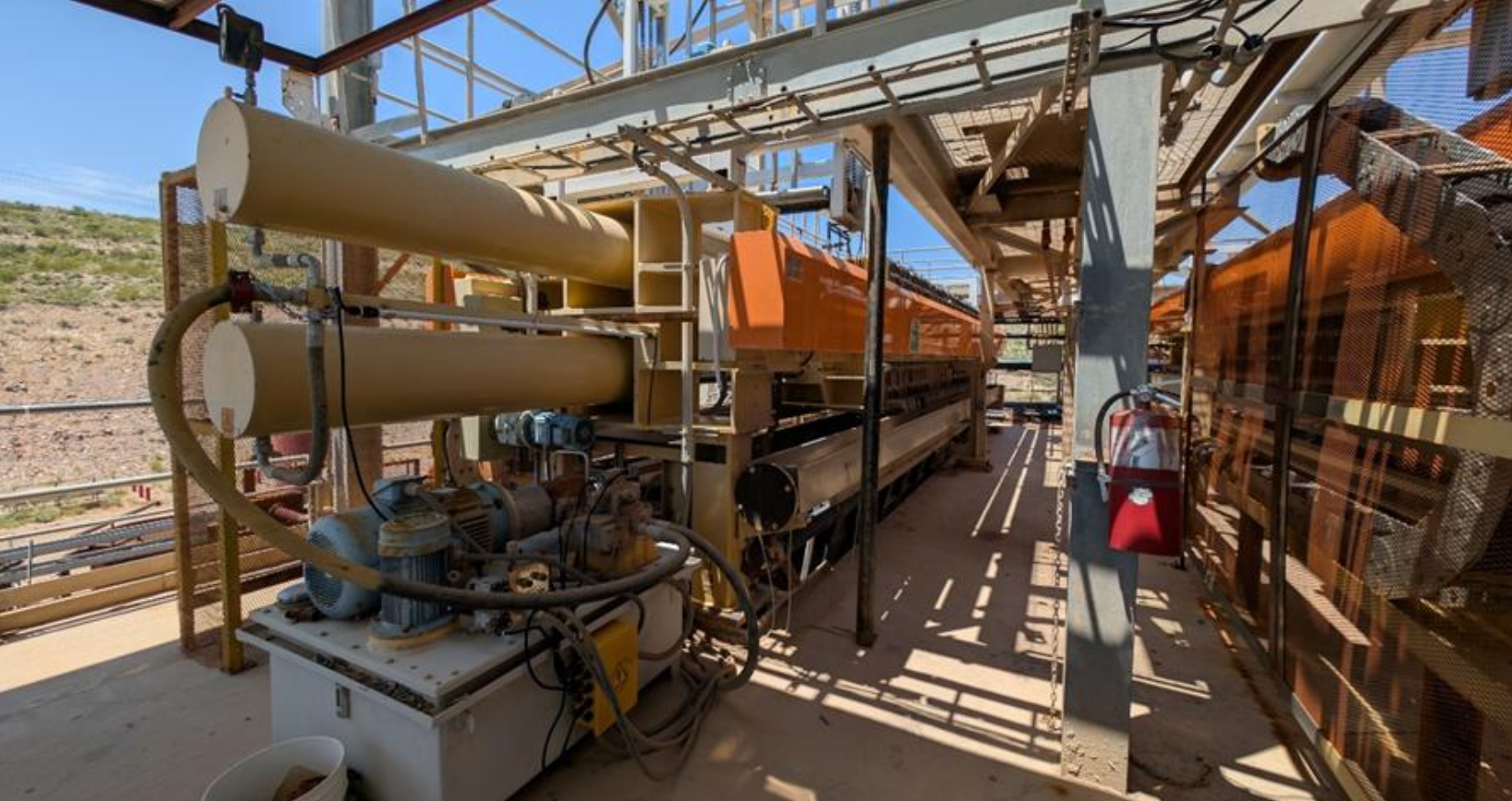
Figure 4: Shafter Processing Facility Filter Press (one of two filter press’).

Figure 5: Shafter Mine and Processing Substation.
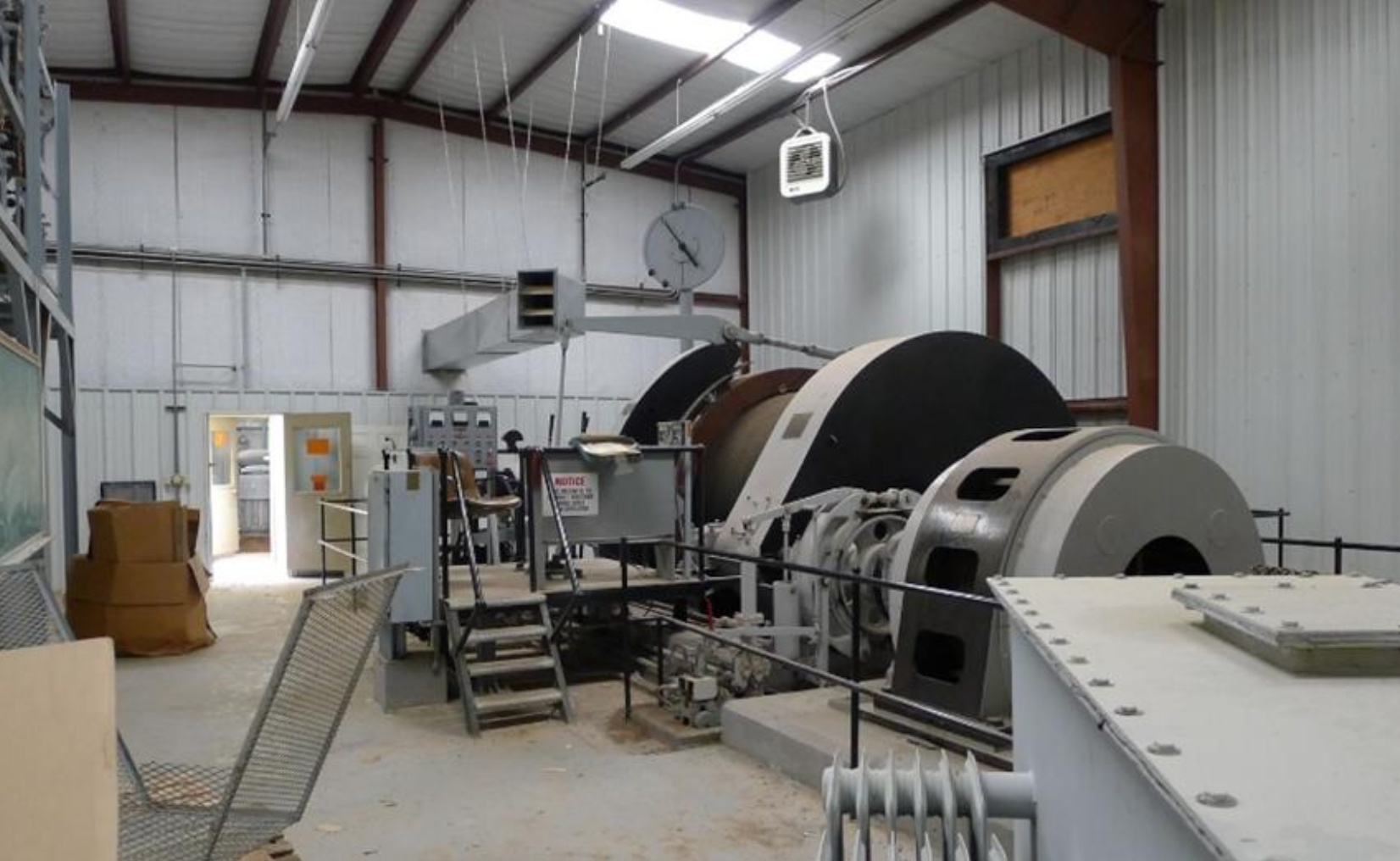
Figure 6: Underground Mine Winch.
Figure 7: Shafter Underground Decline (left), and Core Storage Facility (right)
Geology and Mineralisation
The geology within southwest Texas comprises a sequence of Jurassic-Cretaceous sedimentary basin rocks overlain by older Paleozoic basement. The sedimentary carbonate sequence extends over 1,600km from northern Mexico, through southwestern Texas, to southeastern Arizona, and were thrust faulted and folded during the Laramide orogeny. Silver-lead-zinc deposits, including the Shafter deposit, occur across the strike of the carbonate sequences, though little attention has been historically focused outside Mexico.
The Shafter mining district is located on the south flank of the Chinati Mountains, adjacent to a Tertiary age volcanic caldera. Outcrops in the district are predominantly Permian and Cretaceous limestone, dolomite, siltstone, and sandstone, that were uplifted during the Cretaceous-Tertiary Laramide orogeny and were later cut by Tertiary intrusions.
The mineralised zones in the Shafter district occur mainly as replacement bodies along bedding planes in the upper Permian limestone, directly below the unconformable contact with the base of the Cretaceous sequence. Mineralised zones, termed ‘mantos’, are generally parallel to bedding and dip gently southeast.Manto thickness is generally 2.5 – 4.5m, increasing where near-vertical ‘feeder’ structures dissect.
The global Shafter mineralised zone is up to 450m wide in a north-south direction and extends at least 4km on a northeast trend. Silver is present predominately as oxidized acanthite in aggregates of quartz, calcite, and goethite, with lesser dolomite, hemimorphite, willemite, anglesite, galena, smithsonite, and sphalerite.
The Shafter Mineralisation broadly follows the trend of the MacDaniel Fault, which is thought to be a major feeder structure for mineralisation. Recent work by Gold Fields and Aurcana focussed on defining mineralisation along strike to the northeast of the historic Presidio Mine, defining a 1.8km mineralised zone termed the ‘Shafter Extension’.

Figure 8: Geological Map of the Shafter Project, showing key structures and intrusive units in relation to the Shafter Deposit.
Polymetallic Potential
The Shafter Foreign Mineral Resource Estimate incorporates only silver, with no previous consideration given to multi-commodity potential. Recent exploration by Black Bear Minerals has confirmed that mineralisation at the Project is polymetallic in nature, with drilling and surface sampling returning significant results for zinc, gold, lead and vanadium alongside silver.
Company drilling to date has returned assay results including up to 36.5% zinc, 0.5g/t gold, and 6.9% lead, with high-grade silver intervals also carrying meaningful base metal credits. Surface rock chip sampling has returned results of up to 3,100g/t Ag, 4.5% Zn and 6% Pb outside the current resource area.
Black Bear Minerals intends to incorporate multi-commodity results into a future maiden JORC Mineral Resource Estimate, providing a more comprehensive understanding of the Project's full value potential.
Foreign Mineral Resource Estimates
In December 2015, Mine Development Associates completed an NI 43-101 compliant technical report for the Shafter Project on behalf of Aurcana Silver Corporation. The following global Foreign Mineral Resource Estimate (MRE) has been converted from imperial to metric units for clarity, based on the 2015 report.
Measured
137
0.09
299
0.89
Indicated
137
1.01
314
10.17
Inferred
137
0.79
256
6.51
Total
137
1.89
289
17.57
Table 1: Shafter NI 43-101 Resource Estimate (2015)
The Mineral Resource Estimate at the Shafter Silver Project is a foreign estimate prepared in accordance with Canadian National Instrument 43-101. A competent person has not done sufficient work to classify the foreign estimate as a Mineral Resource in accordance with the JORC Code 2012, and it is uncertain whether further evaluation and exploration will result in an estimate reportable under the JORC Code 2012.
The 2015 estimate is the latest Foreign Mineral Resource Estimate reported for the Project. Foreign MREs for the Project have historically reported only silver mineralisation.
Black Bear Minerals is working to convert the existing Foreign MRE to JORC 2012 standards and intends to incorporate all economically significant elements, including gold, zinc and lead, into a future maiden JORC Mineral Resource Estimate.

Figure 9: Long Section through Shafter Deposit showing maximum in-hole Ag . Red callouts represent underground drillhole intercepts, whilst blue callouts represent from-surface vertical drillhole intercepts.
The 2015 Foreign Mineral Resource Estimate of the Shafter Project largely excludes mineralisation of the historic Presidio Mine area (Figure 2). The 2015 block-diluted Foreign MRE was prepared for mine-restart planning under tight constraints, including removal of any block intersecting ≥5% underground workings, a 4.0oz/t (137g/t) Ag cut-off and a US$18.50/oz silver price, focusing on material that suited the existing infrastructure.
Next Steps
Black Bear Minerals has commenced exploration drilling program at the Shafter Project and is now advancing toward a maiden JORC Mineral Resource Estimate and operational restart studies.
Drilling & Resource Definition
Drilling to date has confirmed high-grade silver and polymetallic (zinc, gold and lead) mineralisation within and outside the existing Foreign MRE. The Company is planning infill drilling to validate the Foreign MRE and support the preparation of a maiden JORC Mineral Resource Estimate.
The Company is also re-logging and re-sampling available historic core to better understand the distribution of all significant commodities across the Project including gold, zinc, and lead with a view to incorporating results into a future JORC Mineral Resource Estimate.
Mine Workings Assessment
Systematic sampling of historic mine workings at the Presidio Mine area is underway to determine the grade of material remaining in the walls of drifts and stopes. The historic Presidio Mine material is currently excluded from the Foreign MRE and encompasses approximately 1km of strike yet to be adequately quantified.
Restart Studies — Ausenco Engagement
Black Bear Minerals has awarded operational restart studies to global engineering firm Ausenco (via Ausenco Engineering USA South Inc.), building on previously completed site inspection, dilapidation and operational restart assessment work.
The scope of studies include:
- Process trade-off studies and flowsheet optimisation
- Metallurgical test work and ore variability assessment
- Mine planning and staged operational sequencing
- Infrastructure reuse and refurbishment strategies
- Long-lead procurement assessment
- Environmental review
- Financial and execution planning
These studies are intended to support a staged brownfield restart strategy focused on maximising reuse of the Project's estimated A$150M of existing infrastructure.

Figure 10: Exploration Targets for the Shafter Project.
Click through to see the Acquisition Announcement here
Forward-looking statements
This announcement may contain certain forward-looking statements, guidance, forecasts, estimates or projections in relation to future matters (Forward Statements) that involve risks and uncertainties, and which are provided as a general guide only. Forward Statements can generally be identified by the use of forward-looking words such as “anticipate”, “estimate”, “will”, “should”, “could”, “may”, “expects”, “plans”, “forecast”, “target” or similar expressions and include, but are not limited to, indications of, or guidance or outlook on, future earnings or financial position or performance of the Company. The Company can give no assurance that these expectations will prove to be correct. You are cautioned not to place undue reliance on any forward-looking statements. None of the Company, its directors, employees, agents or advisers represent or warrant that such Forward Statements will be achieved or prove to be correct or gives any warranty, express or implied, as to the accuracy, completeness, likelihood of achievement or reasonableness of any Forward Statement contained in this announcement. Actual results may differ materially from those anticipated in these forward-looking statements due to many important factors, risks and uncertainties. The Company does not undertake any obligation to release publicly any revisions to any “forward- looking statement” to reflect events or circumstances after the date of this announcement, except as may be required under applicable laws.


